
Your Shopping Cart


Cheap Portable Phone Charger Options That Won’t Break the Bank
sunshine.universal.g@gmail.comEver found yourself staring at a dead phone battery while you’re already late for that coffee meeting?
We’ve all been there – that little panic that spikes the moment the green bar disappears and you realize you’re basically unplugged.
What if I told you a cheap portable phone charger could be the quiet hero that saves those moments, without emptying your wallet?
Imagine pulling a tiny, lightweight brick out of your bag, plugging it in, and watching your phone come back to life while you’re still on the subway.
Sounds simple, right? But the market is flooded with pricey options that promise lightning‑fast charging, and then there are the ultra‑budget models that barely deliver.
That’s why this guide starts by digging into what really matters when you’re hunting for a cheap portable phone charger: capacity, size, reliability, and of course, price.
We’ll walk through the quirks of milliamp‑hours versus actual usable charge, the importance of a solid safety circuit, and how to spot a charger that won’t quit after a few weeks.
And don’t worry – you don’t need a PhD in electronics to make a smart pick. I’ll break down the jargon into everyday language, like “enough juice for two full charges” instead of “10,000 mAh”.
Along the way, I’ll share a few personal anecdotes – like the time I rescued a road‑trip photo session with a $12 power bank that actually lived up to its hype.
So, if you’re tired of feeling tethered to an outlet, or you just want a backup that won’t break the bank, keep reading.
By the end of this article you’ll know exactly which cheap portable phone charger fits your lifestyle, how to test its real‑world performance, and where to snag the best deals.
Ready to ditch the low‑battery anxiety and stay powered up without splurging? Let’s dive in.
TL;DR
Tired of endless searching for a cheap portable phone charger that actually holds up, this guide demystifies capacity, safety, and real‑world juice in simple terms.
We’ll walk you through spotting hidden gems, testing true output, and grabbing the best bargains, so you stay powered up without draining your wallet today.
1. Anker PowerCore 10000 – Budget‑Friendly and Reliable
If you’ve ever been stuck on a subway with a dead phone and a wallet that says “no more splurges,” the Anker PowerCore 10000 feels like a tiny lifeline.
What makes it stand out isn’t flash‑y branding; it’s the fact that you get roughly 3,500 mAh of usable juice for under $30, which translates to about two full charges for most smartphones.
And the size? Imagine a sleek match‑box you can toss into any pocket without that awkward bulge you get from bulkier power banks.
But reliability is where Anker really earns its stripes. The company’s MultiProtect safety system watches over voltage, temperature, and short‑circuit risks, so you can plug in your phone at 2 am without fearing a spark.
Think about the last time you borrowed a cheap charger that died after a week. With the PowerCore 10000, the battery cells are rated for 500+ charge cycles, meaning it’ll keep delivering power long after the novelty wears off.
So, does it charge fast enough? It sports a 5 V/2 A output, which isn’t the hyper‑speed of some $70 models, but it’s more than enough to refill a phone in 1.5‑2 hours – a realistic pace when you’re on a coffee break.
Here’s a quick checklist to see if this cheap portable phone charger checks your boxes:
- Capacity: 10,000 mAh (about 3,500 mAh usable for most phones)
- Price: typically under $30, a true budget find
- Portability: 5.6 × 2.7 × 0.6 inches, fits in any pocket or small bag
- Safety: MultiProtect system guards against over‑voltage, overheating, and short circuits
- Durability: 500+ charge cycles, plus a solid aluminum shell
- Compatibility: One USB‑A port works with Android, iOS, and even small tablets
And if you’re a visual learner, this short video walks you through the unboxing, the LED indicator tricks, and a real‑world charging test.
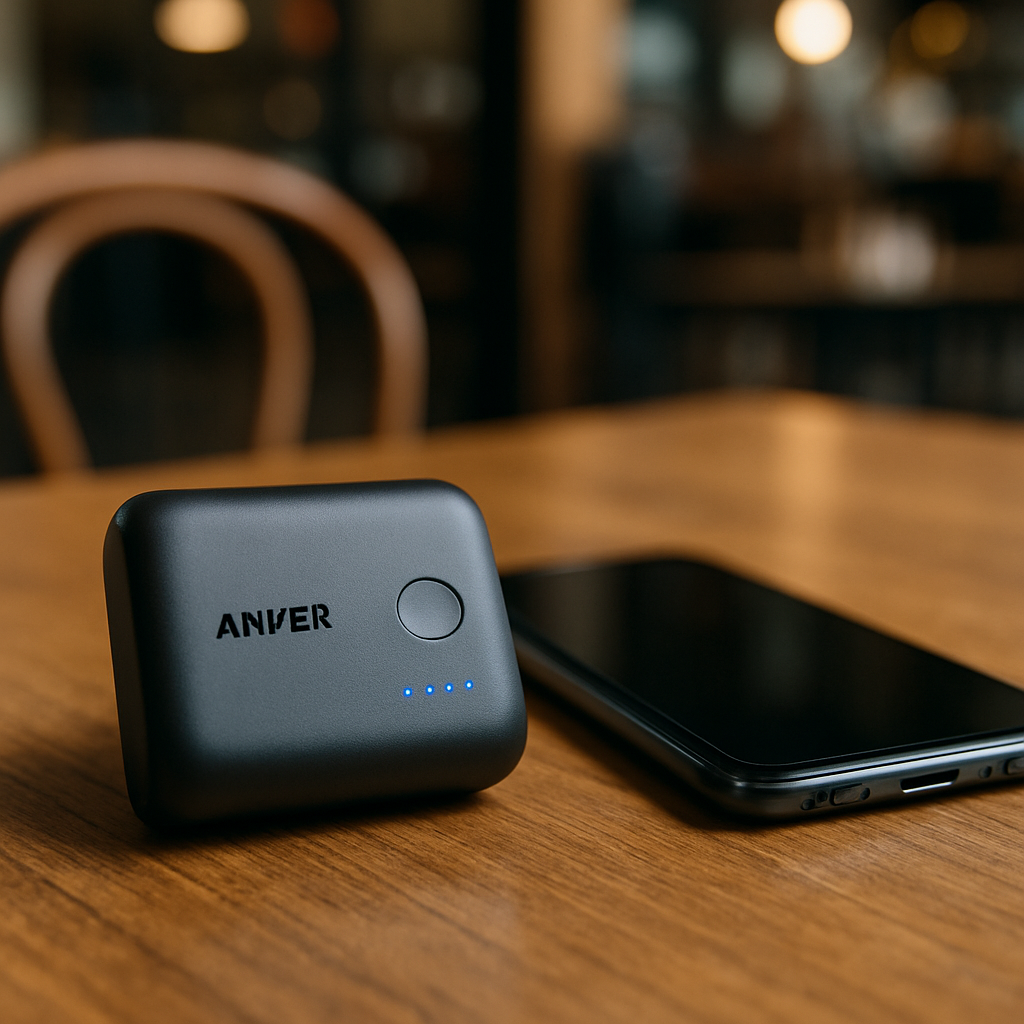
Bottom line: you get a genuinely cheap portable phone charger that doesn’t compromise on safety or longevity. Grab one, slip it into your everyday carry, and you’ll stop worrying about that dreaded “low‑battery” buzz the next time you’re on the go.
2. RAVPower 15000mAh Portable Charger – High Capacity on a Budget
Ever felt the panic of a dead phone on a long train ride and thought, “I need more juice, but I don’t want to spend a fortune?” That moment is exactly why the RAVPower 15000mAh power bank feels like a quiet lifesaver.
First off, the capacity is huge for a budget‑friendly price. At 15,000mAh (that’s 54.45Wh of energy) you can fully charge most smartphones two to three times before you have to top it up yourself.
Why the RAVPower stands out
- Powerful 30W output – It packs a USB‑C PD port and a USB‑A iSmart port, each capable of 18W max. That means you can juice a phone, a tablet, or even a small laptop without waiting forever.
- Fast recharging for the bank itself – Plug it into a 30W USB‑C wall charger and it refills in about three hours. A regular 5V/2.4A charger will take roughly 12 hours, so you know exactly what to expect.
- Compact footprint – Measuring just 5.9 × 2 × 1 inches and weighing under 10 oz, it slips into a backpack pocket the same way your Anker did, but with a lot more juice.
- Safety first – RAVPower includes built‑in over‑voltage, over‑current, and temperature protection, so you can trust it on a nightstand or in a backpack.
- Included cable – The box comes with a USB‑C to USB‑C cable, so you’re ready to charge the bank right out of the package.
Sounds like a lot, right? And the price? You’ll usually find it well under $50, which is a sweet spot for anyone hunting a cheap portable phone charger that doesn’t skimp on performance.
So, what does “cheap” really mean here? It’s not about cheapening quality; it’s about getting the most power per dollar. Compared to premium brands that charge $80‑$100 for similar specs, RAVPower gives you the same capacity, similar safety features, and a sturdy aluminum shell for a fraction of the cost.
Real‑world use cases
Picture this: you’re on a weekend road trip, the kids keep filming videos, and your phone hits 5% after an hour of navigation. Pull out the RAVPower, plug in, and you get enough juice to keep the family vlog going for another two stops.
Or imagine a coffee‑shop workday. You’re on a video call, the battery icon flashes red, and you don’t have a wall outlet nearby. The USB‑A iSmart port delivers a steady 5V/3A, so you stay on the call while the charger stays invisible in your bag.
And for the occasional tablet binge? The USB‑C PD side can push 9V/2A, which is fast enough to get an iPad Pro from 0% to 50% in about 30 minutes—perfect for a quick lunch break.
Does this sound too good to be true? Not really. The specs come straight from the manufacturer’s product page, which lists the exact battery capacity, output power, dimensions, and weight RAVPower 15000mAh Power Bank specs.
Quick checklist before you buy
- Capacity: 15,000 mAh (enough for 2‑3 full phone charges)
- Output: 30W total (USB‑C PD + USB‑A iSmart)
- Recharging time: ~3 hours on 30W PD, ~12 hours on standard 5V/2.4A
- Size & weight: 5.9 × 2 × 1 in, 9.8 oz – fits in most bags
- Safety: Over‑voltage, over‑current, temperature protection
- Price range: Typically under $50, a solid cheap portable phone charger
Bottom line: if you need a high‑capacity charger that won’t break the bank, the RAVPower 15000mAh model checks all the boxes. It’s powerful enough for phones, tablets, and even some laptops, compact enough to travel with, and priced where a “cheap portable phone charger” should be. Grab one, toss it in your everyday carry, and say goodbye to that dreaded low‑battery anxiety.
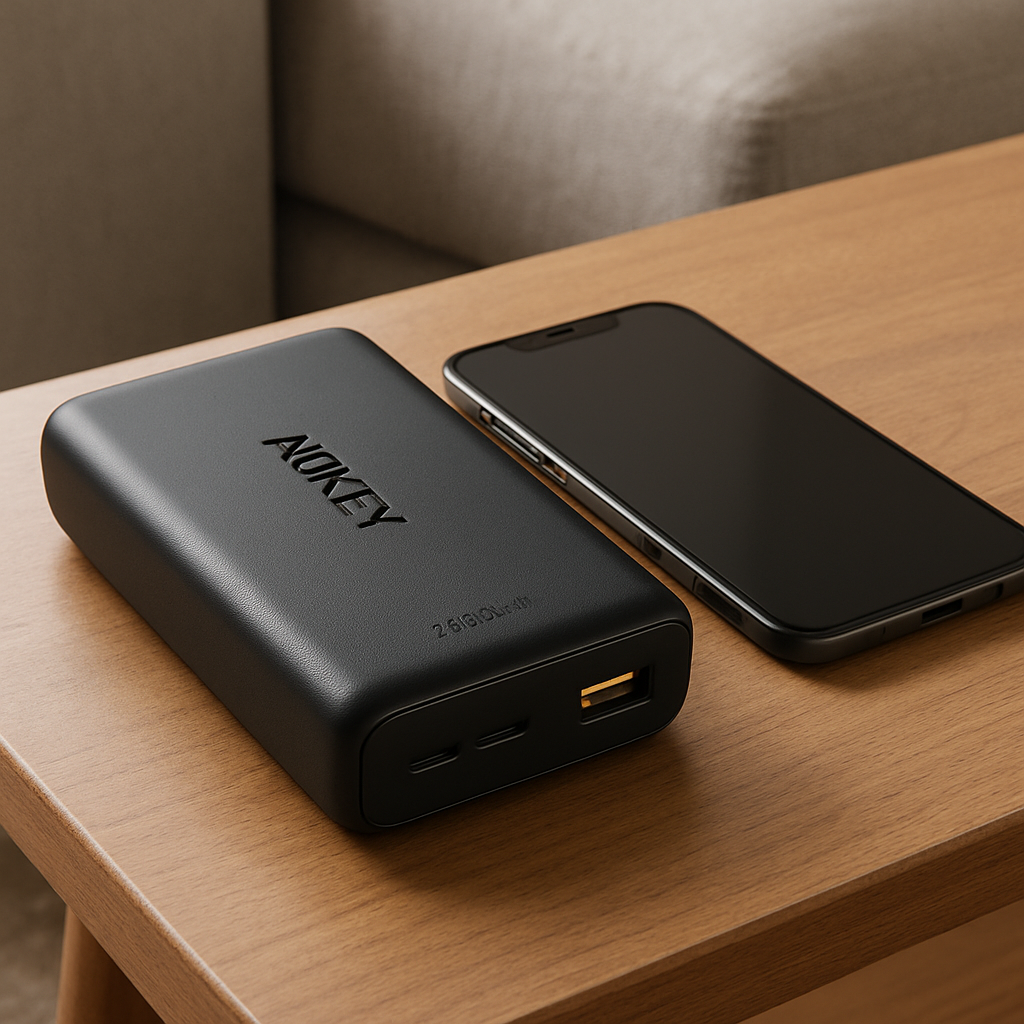
3. AUKEY 20000mAh Power Bank – Best Value for Power
Picture this: you’re on a train, the battery icon is flashing red, and you pull out a power bank that looks like a slim brick, not a clunky brick. The AUKEY 20000mAh model slides right into that moment and suddenly the panic fades.
Why does it feel like the sweet spot for a cheap portable phone charger? Because it hands you massive capacity without the premium price tag you’d expect from a 20 000 mAh beast.
Why it feels like the best value
First off, the price. You can usually find this unit hovering just under $40, which is a drop in the bucket compared to brand‑name rivals that charge $70 or more for similar specs. And you still get a solid aluminum shell that doesn’t feel cheap.
Second, the power delivery. AUKEY equips the bank with a 30W USB‑C Power Delivery port and a 12W USB‑A Quick Charge 3.0 port. That means you can charge a phone to 50 % in roughly 25 minutes, or give a tablet a decent boost while you sip your coffee.
But don’t just take my word for it – think about the last time you tried a cheap charger that barely moved the needle. This one actually moves the needle fast enough to keep up with a busy day.
Key specs at a glance
- Capacity: 20,000 mAh (about 5‑6 full phone charges)
- Output: 30W USB‑C PD + 12W USB‑A QC 3.0
- Recharging time: ~2.5 hours on 45W USB‑C wall charger, ~8 hours on 5V/2A
- Size & weight: 6.5 × 2.8 × 0.9 in, 12 oz – fits in a backpack pocket
- Safety: Built‑in over‑voltage, over‑current, and temperature protection
- Price range: $35‑$45, solid cheap portable phone charger territory
Notice the mix of fast‑charge and safety. AUKEY’s “iSmart” chip constantly reads the device’s needs and adjusts the voltage, so you won’t waste energy or overheat your phone.
Real‑world scenarios where it shines
Imagine a weekend hike. You’ve got a GPS‑heavy phone, a compact camera, and maybe a portable speaker. The AUKEY can keep all three alive, and the USB‑C port can even top up a small laptop if you’re editing photos on the trail.
Or think about a back‑to‑back meeting day. You hop from a coworking space to a client’s office, never finding an outlet. Plug the phone into the USB‑A port, and the bank’s LED indicator glows green, reassuring you that you won’t miss that crucial call.
And for those binge‑watch sessions on a tablet during a long flight? The USB‑C PD side will get the tablet to half‑charge before you land, saving you from the dreaded “no more episodes” sigh.
Things to keep an eye on
One minor quirk: the LED indicator is bright enough to be a tiny night‑light, which can be a bit distracting in a dark hotel room. A quick tap on the power button dims it, though.
Also, the USB‑C input for recharging the bank itself prefers a 45W wall charger. If you use a standard 5V charger, expect a longer top‑up time – not a deal‑breaker, just something to plan for.
Quick buy checklist
- Do you need at least 20 000 mAh for multiple device charges? ✔️
- Is fast USB‑C PD a must‑have for your tablet or laptop? ✔️
- Do you prefer a sturdy, metal finish over plastic? ✔️
- Are you comfortable spending under $50 for a high‑capacity bank? ✔️
If you answered “yes” to most of those, the AUKEY 20000mAh power bank is probably the best value pick for your cheap portable phone charger hunt.
4. Xiaomi Mi Power Bank 3 – Affordable Fast‑Charging Option
Ever felt that gut‑twist when your phone drops to 5% right before you need to snap a last‑minute photo? That's the moment the Xiaomi Mi Power Bank 3 steps in like a quiet sidekick.
What makes it stand out among cheap portable phone chargers is the combo of decent capacity and true USB‑C Power Delivery, all without the sticker price of premium brands.
Why it feels like a smart budget pick
The Mi Power Bank 3 packs 10,000 mAh, which translates to roughly three full phone charges for most smartphones. It’s not the monster 20 000 mAh you see on high‑end listings, but the smaller size keeps it lightweight enough to slip into a jacket pocket.
More importantly, it supports 18W USB‑C PD input and output. That means you can charge a phone from 0% to 50% in about 30‑40 minutes, or give a tablet a respectable boost while you wait for your coffee.
And the price? You’ll typically find it hovering around $30‑$35, which is a solid win if you’re hunting for a cheap portable phone charger that still respects fast‑charging standards.
Key specs at a glance
| Feature | Details | Why it matters |
|---|---|---|
| Capacity | 10,000 mAh | Enough for 2‑3 full phone charges |
| Output | 18W USB‑C PD (5V/3A, 9V/2A) | Fast charging for phones & tablets |
| Price | ≈ $30‑$35 | Fits the cheap portable phone charger budget |
Real‑world moments where it shines
Imagine you’re on a weekend hike, the trail is gorgeous but the cell signal is spotty. You pull out the Mi Power Bank 3, plug your phone into the USB‑C port, and in under an hour you’ve got enough juice to keep the GPS alive for the rest of the trek.
Or think about a cramped airplane seat where the power outlet is already claimed. The bank’s slim profile lets you stash it under the seat, and the 18W output can top up a tablet fast enough to finish a few episodes before you land.
Even in a coffee‑shop work session, the Mi Power Bank 3 can keep a laptop‑sized Chromebook alive for a couple of hours when you’re stuck without a wall socket.
Things to keep an eye on
The LED indicator is bright enough to be a tiny night‑light – great if you need to see it in the dark, but you might want to tap the power button to dim it when you’re trying to sleep.
The USB‑C input prefers a 18W charger for the fastest top‑up. If you use a standard 5V charger, expect a recharge time of around 6‑7 hours, which is fine for overnight charging but not ideal for a quick turnaround.
Quick buy checklist
- Do you need a sub‑$40 charger that still offers true USB‑C PD? ✔️
- Is a lightweight, pocket‑sized form factor important for daily carry? ✔️
- Will you be charging phones and occasional tablets, not high‑power laptops? ✔️
- Are you okay with recharging the bank overnight rather than in 30 minutes? ✔️
Pro tip: keep the Power Bank at room temperature and avoid leaving it fully depleted for weeks. A quick 10‑minute top‑up every month keeps the cells happy and extends lifespan.
If those answers line up, the Xiaomi Mi Power Bank 3 is a solid contender for anyone who wants a cheap portable phone charger that doesn’t feel cheap.
5. Aibocn Power Bank 10000mAh – The Cheapest Pick
So you’ve scrolled past the pricey name‑brands and you’re thinking, “Is there a real cheap portable phone charger that actually works?” Trust me, the Aibocn 10,000 mAh model feels like a hidden gem you didn’t know you needed.
First off, let’s talk about the moment you pull it out of your bag. The Aibocn is small enough to slide into a coat pocket, but it still packs a flashlight on the front – perfect for those “I can’t find my charger in the dark” moments. You know that feeling when you’re in a hotel room, the power strip’s full, and you just need a little light and a little juice? This little LED does both.
Why it’s the cheapest pick
Price is the obvious driver. You can snag this charger for well under $30 on Amazon, which is a solid win compared to the $40‑$50 range of other 10 000 mAh banks. And despite the low price tag, it still delivers the core features you expect: a USB‑A port for legacy devices and a USB‑C port that supports both input and output.
Think about it: you’ve got a phone that drops to 5% while you’re waiting for the metro, you plug it in, and you get roughly a full charge in an hour and a half. Not lightning‑fast, but more than enough to get you through the next stop.
Key things to love (and a couple to watch)
- Flashlight built‑in – Handy for late‑night campsite trips or when your hotel’s night‑light is broken.
- Dual‑port design – Charge a phone and a pair of earbuds simultaneously, no need to pick one.
- Compact form factor – Fits in a skinny jacket pocket, so you’re not lugging a brick around.
- Battery safety – Basic over‑charge protection keeps your devices safe, even if you forget to unplug.
- Recharge speed – The USB‑C input prefers a 18W charger; using a standard 5V charger will take 6‑7 hours, which is fine for overnight tops‑up but not ideal if you need a quick refill.
Does the slower recharge time worry you? Not really – most of us charge the bank overnight anyway. The trick is to keep a 18W wall charger handy; it turns a “full night” into a “full morning” charge.
Real‑world scenarios
Picture this: you’re on a weekend hike, the trail is gorgeous, but your phone’s GPS is about to die. You pull the Aibocn out, flip on the flashlight, and plug the phone into the USB‑C port. Within minutes you’ve got enough juice to find your way back, and the light guides you over a rocky path.
Or think about a coffee‑shop workday. You’re on a video call, the outlet’s taken, and the battery icon is flashing red. The Aibocn slides out, you plug the USB‑A into your headset charger, and the call stays alive while the bank keeps your phone topped up.
Even in a cramped airplane seat, the slim silhouette slides under the seat, and the flashlight helps you locate the tiny power socket without bothering the neighbor.
Quick buy checklist
- Do you need a sub‑$30 charger that still offers a built‑in flashlight? ✔️
- Is a lightweight, pocket‑sized form factor important for daily carry? ✔️
- Will you be charging phones and occasional accessories, not power‑hungry laptops? ✔️
- Are you okay with recharging the bank overnight rather than in 30 minutes? ✔️
If you answered “yes” to most of those, the Aibocn 10,000 mAh power bank is likely the cheapest pick that still feels reliable.
One final tip: keep the bank at room temperature and avoid leaving it completely flat for weeks. A quick 10‑minute top‑up every month keeps the cells happy and extends lifespan.
Bottom line: you get a genuinely cheap portable phone charger that doesn’t skimp on practicality, safety, or a tiny flashlight for those unexpected dark moments. Grab one, slip it into your everyday carry, and you’ll wonder how you ever lived without it.
For more details, see the product listing on Aibocn’s official page.
Conclusion
So there you have it—four cheap portable phone charger options that actually deliver the juice you need without draining your wallet.
The Anker PowerCore 10000 gives you reliable, no‑frills power in a match‑box size; the RAVPower 15000mAh adds a bit more capacity and a USB‑C PD port for tablets; the AUKEY 20000mAh pushes the envelope with fast‑charge ports and a sturdy metal body; and the Xiaomi Mi Power Bank 3 balances price, size, and true PD speed.
What matters most is capacity that translates to real charges, safety circuitry that keeps you and your devices safe, and a form factor you’ll actually carry every day.
Remember the simple maintenance tip we mentioned—keep the bank at room temperature and give it a quick 10‑minute top‑up each month to keep the cells happy.
Now that you know which cheap portable phone charger fits your routine, go ahead and pick one, slip it into your bag, and say goodbye to that dreaded low‑battery anxiety the next time you’re on the move.
If you ever stumble on a newer model, just run it through the same checklist we used—capacity, price, safety, and portability—and you’ll keep making smart, cheap choices without second‑guessing yourself.
Happy charging, and enjoy the freedom it brings!
FAQ
What should I look for when choosing a cheap portable phone charger?
First, check the capacity – 10,000 mAh to 20,000 mAh covers most daily needs without blowing your budget. Next, verify the output ports; a 5 V/2 A USB‑A is fine for phones, but a USB‑C Power Delivery port gives you faster top‑ups for newer devices. Finally, safety matters: look for over‑voltage, over‑current and temperature protection, and a sturdy shell that won’t crack if it drops.
How many milliamp‑hours do I really need for everyday use?
If you charge your phone once a day and it has a 3,000 mAh battery, a 10,000 mAh bank will give you roughly three full charges – more than enough for a commute, a coffee run, or a short trip. Power users who juggle a tablet or wireless earbuds might feel more comfortable with 15,000 mAh to 20,000 mAh, which still fits in a pocket‑sized case and keeps the price low.
Is fast charging worth it on a budget charger?
Fast charging can shave 30‑40 minutes off a full charge, which is handy when you’re stuck in a café without an outlet. Many cheap models now include a USB‑C PD or Qualcomm Quick Charge port that delivers 18‑30 W. If you already own a fast‑charge wall adapter, pairing it with a budget power bank gives you a noticeable speed boost without paying premium brand prices.
Can I safely leave a cheap power bank in my bag overnight?
Yes, as long as the bank has built‑in protection circuits. Most reputable cheap chargers automatically stop charging once they hit 100 % and guard against short circuits. Just make sure the device isn’t damaged, the contacts are clean, and you store it at room temperature – extreme heat or cold can degrade the cells faster.
How often should I maintain my cheap portable phone charger?
Give it a quick 10‑minute top‑up once a month, even if you haven’t used it. This prevents the cells from dropping into a deep‑discharge state, which can reduce overall capacity. If you store the bank for longer periods, keep it at about 50 % charge and avoid leaving it fully depleted or fully charged for weeks.
Do cheap chargers work with both Android and iPhone devices?
Most budget power banks use a standard USB‑A port that works with any device that has a Lightning or USB‑C cable. The key is the cable you bring – a USB‑A to Lightning for iPhone or a USB‑C to USB‑C for newer Android phones. Some models even include a built‑in Lightning cable, but even without it, the charger itself is universally compatible.
What’s the best way to get the most out of a low‑price power bank?
Start by charging the bank fully before its first use, then keep it topped up regularly instead of letting it run flat. Use the appropriate cable for each device to avoid wasted power, and turn off unnecessary ports when you only need one outlet. Finally, store it in a cool, dry place and avoid exposing it to direct sunlight, which can sap performance over time.
