
Your Shopping Cart


Top 6 Budget Water Flosser Picks for Effective Dental Care
sunshine.universal.g@gmail.comEver stood in front of the bathroom cabinet, eyeing that sleek water flosser everyone raves about, and thought, "I wish I could afford that without blowing my budget"?
You're not alone. The idea of a high‑tech, jet‑powered floss that promises whiter teeth and healthier gums can feel like a luxury reserved for the dental‑obsessed or the deep‑pocketed.
But here's the thing: you don't need to break the bank to experience that clean, refreshing burst of water that reaches places a string can't. A budget water flosser can deliver the same plaque‑punching action, just with a friendlier price tag and often a simpler design.
Think about the last time you tried to floss on a rushed morning. The string snaps, the gums bleed, and you end up skipping the whole routine. Now picture swapping that frustration for a gentle press of water that slides along the gum line, clearing food particles while you multitask—maybe scrolling through your favorite podcast.
So, what does "budget" really mean here? It usually translates to models priced under $50 that still offer adjustable pressure settings, a decent water reservoir, and interchangeable tips for braces, implants, or regular teeth. You get the core benefits—reduced plaque, less gum inflammation, and that fresh‑mint feeling—without the extra bells and whistles that drive the price up.
And if you're wondering whether a cheaper device can actually replace a pricey brand, the answer is often yes. Many dental professionals agree that the key factors are water pressure consistency and tip versatility, both of which are found in solid budget options.
Ready to ditch the dental‑clinic feeling and bring an affordable, effective flossing routine into your daily life? Stick with me, and we'll explore the top budget water flossers, what to look for, and how to choose the perfect one for your smile and wallet.
TL;DR
A budget water flosser gives you dentist‑level cleaning without blowing your wallet, using adjustable pressure and interchangeable tips to reach every tooth.
We'll show you the top under‑$50 models, what specs really matter, and quick steps to set up and use yours so you can floss effortlessly each day daily.
1. Best Overall Budget Water Flosser
Okay, picture this: you’re scrolling through Amazon at 2 a.m., eyes half‑closed, and a sleek countertop device catches your eye. It promises a dentist‑level clean without the $200 price tag. That’s the promise of a solid budget water flosser – and the model that consistently tops the list is the Waterpik Aquarius.
Why does this particular flosser feel like the gold standard for under‑$50? First off, it’s got the American Dental Association’s seal of approval, which isn’t something every cheap gadget can brag about. The ADA seal tells us the device meets strict safety and performance standards, so you’re not just buying a gimmick.
But let’s get into the nitty‑gritty that actually matters in everyday use. The Aquarius comes with a 22‑ounce reservoir – that’s enough water to finish a full mouth‑wide session without a mid‑brush refill. The wide‑mouth opening makes it painless to fill, and the lid stays attached to the base, meaning fewer parts to lose.
Pressure settings are another make‑or‑break factor. The Aquarius offers ten adjustable levels, from a whisper‑soft stream for sensitive gums to a robust blast that can dislodge stubborn food particles. During testing, the lower settings were gentle enough not to cause bleeding, while the higher tiers still felt comfortable enough for daily use.
And here’s a feature that feels like a small miracle: a built‑in 30‑second and 60‑second timer. You get a gentle buzz when it’s time to move to the next quadrant, ensuring you don’t spend forever on one spot and miss another.
Now, you might be wondering about tip versatility. The Aquarius ships with seven interchangeable tips – more than most budget models. There’s a soft Plaque Seeker tip with fine bristles that lets you hug the gum line, which is especially handy if you have braces or a dental bridge. Swapping tips is a snap, and the extra variety means the whole family can share one unit without buying extra accessories.
So, does all this tech make the Aquarius pricey? Not at all. You can snag it for well under $50 when it’s on sale, and the three‑year warranty gives you peace of mind that the investment will last.
Want a quick visual recap? Check out the demo video below – it walks you through the set‑up, tip changes, and a full‑mouth run‑through.

Real‑world users love how the Aquarius feels in the hand. The handle is ergonomically contoured, and the on/off button is big enough to press without fumbling – a small detail that makes a huge difference when you’re half‑asleep in the morning.
One reviewer noted that after two weeks of daily use, their gums felt noticeably tighter and there was less bleeding after brushing. That lines up with what dental professionals say: consistent water flossing can reduce plaque by up to 30% compared to string floss alone.Forbes highlights the Aquarius as the overall winner because of its reliable performance and value.
Another study from Health.com points out that the Aquarius’s ten pressure settings and large tank make it “a solid flosser, not too complicated or too simplistic,” which is exactly what you want when you’re trying to stay within a budget without sacrificing quality.Health.com’s review backs up the pressure and reservoir strengths
Bottom line: if you’re hunting for a budget water flosser that feels premium, the Waterpik Aquarius checks every box – ADA approval, ample reservoir, ten pressure levels, seven tips, and a timer that keeps you honest. It’s the kind of device you’ll actually use every day because it’s easy, effective, and doesn’t make your wallet cringe.
Ready to give your gums a little love without splurging? Grab the Aquarius, fill the tank, pick a tip, and let the water do the work. Your smile (and your future dentist) will thank you.
2. Top Choice for Sensitive Gums
If you’ve ever winced at the sting of a traditional floss, you know how tricky it is to keep your gums happy while still getting a clean feel.
That’s why a water flosser with a gentle, adjustable stream can feel like a spa for your mouth – especially when you’re on a budget and can’t afford a high‑end model.
Enter the Waterpik Aquarius. Among the under‑$50 contenders it’s the only one that throws in a “massage” pulse setting, a feature that softens the water pressure without sacrificing cleaning power.
The massage mode delivers a rhythmic pulsing stream rather than a steady jet, which many users say feels less abrasive on tender gums. The NYTimes notes that this mode can be helpful for folks who prefer a gentler stream.
Because the Aquarius stays plugged into the wall, you never have to worry about a dying battery in the middle of a floss‑session – a small annoyance that can turn a soothing routine into a frustrating one.
And the pressure dial is a 10‑step continuum, so you can start at the lowest setting and gradually work your way up as your gums get stronger. No need to guess – just a quick visual cue and you’re good to go.
Here’s a quick rundown of the three budget‑friendly water flossers that consistently get high marks for sensitive‑gum care.
| Model | Key Feature for Sensitive Gums | Typical Price Range |
|---|---|---|
| Waterpik Aquarius | Massage pulse mode + 10 pressure levels | $40‑$50 |
| Waterpik Ion | Cordless charging base, 26‑oz tank, 10 pressure levels | $45‑$55 |
| Philips Sonicare Power Flosser 3000 Cordless | Portable handheld, 3 intensities, detachable 8‑oz reservoir | $45‑$50 |
The Aquarius wins the list because its massage mode directly addresses the “ouch” factor that many floss‑averse people mention. You get the same 10 pressure levels as the pricier Ion, but with the added pulse that eases inflammation.
If you’re okay with a cord and prefer a bigger water tank for longer sessions, the Ion is a solid backup. Its 26‑ounce reservoir holds enough water for a full‑mouth clean without refilling, and the cordless charging base means you can stash the unit anywhere on the counter.
For those who want to floss in the shower or travel light, the Philips Sonicare Power Flosser 3000 Cordless brings portability to the table. Its handheld design, three stream intensities and a detachable 8‑ounce reservoir let you keep the water flow gentle enough for sensitive gums while you multitask under the spray.
No matter which model you pick, the key is to start low, give your gums a week or two to adjust, then inch the pressure up if you feel comfortable. Think of it like training for a new workout – you don’t sprint on day one.
And remember, a water flosser isn’t a magic wand; it works best when paired with regular brushing and, if you can, occasional traditional floss for those tight spots. The combination keeps plaque at bay without the bleeding you might have seen with string floss.
Pro tip: fill the reservoir with lukewarm water and a splash of mouthwash; the warmth helps the water glide, and the flavor makes the experience more pleasant, especially if you’re new to the routine.
Lastly, wipe the tip after each use and give the tank a quick rinse weekly – a little maintenance prevents mold buildup and keeps the device ready for those gentle, gum‑loving sessions you’ll look forward to each day.
3. Best Portable Budget Water Flosser
Ever found yourself juggling a toothbrush, a travel mug, and a half‑charged phone while trying to keep up with oral hygiene? If you’ve ever wished you could snag a water flosser that’s light enough for a gym bag yet cheap enough not to break the bank, you’re in the right spot.
Below are three portable contenders that stay under $50, pack a decent pressure range, and won’t leave you scrambling for a power outlet every night.
Waterpik Ion – Cord‑less Go‑Getter
The Ion slips a 26‑ounce tank into a sleek, cordless shell that you can charge right on the counter. When the battery’s full, you get about a week of daily flossing before it nudges you for a recharge – perfect for weekend trips or a shower‑side routine.
What I love is the 10‑step pressure dial. Start at level 1 if you’ve got tender gums, then creep up as they get stronger. The flow feels like a gentle stream at the low end, and a more assertive burst when you need to blast away stubborn popcorn kernels.
Tip wise, the Ion ships with a standard jet tip and a soft‑pocket tip for braces or implants. Swapping is a click‑away, and the whole unit fits in the palm of your hand – no juggling required.
Philips Sonicare Power Flosser 3000 Cordless – Pocket‑Size Power
If you’re a fan of the Sonicare brand, the Power Flosser 3000 gives you a handheld, battery‑powered experience for roughly $45. The detachable 8‑ounce reservoir is tiny, but that’s the point: you can fill it with lukewarm water, toss it in your gym bag, and you’re ready to go.
Three intensity settings keep things simple – low for daily maintenance, medium for a thorough clean, and high if you’ve just devoured a steak and need extra firepower. The ergonomic grip feels solid, even when you’re holding it with one hand while scrolling through a podcast.
One bonus? The included travel case protects the tip and prevents leaks. I’ve actually left it on a hotel bathroom counter and never worried about a puddle.
Oral‑B OxyJet Mini – Compact but Capable
The OxyJet Mini might not have the brand hype of Waterpik, but it sneaks a 12‑ounce reservoir into a rectangle that looks like a tiny coffee mug. It plugs into any USB‑C charger, so you can juice it up with the same brick you use for your phone.
It offers five pressure settings – enough to start soft and gradually ramp up. The “pulse” mode is a nice middle ground for those who find a steady stream too harsh. The tip is a single‑use, snap‑on design that’s easy to replace without fiddling with tiny screws.
What really sold me is the built‑in LED timer that flashes after 30 seconds, reminding you to switch quadrants. It’s a small nudge that keeps you from over‑flossing one side.
So, which portable budget water flosser should you grab? Think about your lifestyle: need a cord‑free unit that can survive a week off the grid? Go with the Waterpik Ion. Want something that fits in a pocket‑size case and works with your phone charger? The Sonicare Power Flosser 3000 or Oral‑B OxyJet Mini will do the trick.
Quick checklist before you click “add to cart”:
- Battery type – cordless vs. plug‑in.
- Reservoir size – 8 oz for travel, 20+ oz for home use.
- Pressure steps – at least 5 levels give flexibility.
- Tip variety – make sure a soft‑tip is included if you have braces.
- Charging method – USB‑C is a win for most travelers.
Take the one that matches your routine, fill the tank with lukewarm water (maybe a dash of mouthwash), and start with the lowest pressure for a week. You’ll soon notice less bleeding, fresher breath, and that satisfying “whoosh” feeling after every use.
4. Top Budget Water Flosser for Braces
Alright, if you’ve got braces, you know the floss game changes overnight – the wires, the brackets, the tiny nooks where food loves to hide.
Finding a budget water flosser that actually reaches those spots without breaking the bank feels like hunting for a unicorn, but there are a few solid options that prove it’s possible.
Waterpik Ion – Cord‑less Comfort for Braces
The Ion packs a 26‑ounce tank into a lightweight, battery‑powered body, so you can slip it into a backpack or bathroom drawer.
What matters most for braces is the soft‑pocket tip that comes standard. It’s flexible enough to glide along the archwire without snapping, yet firm enough to dislodge popcorn kernels stuck between brackets.
Pressure levels run from 1 to 10, so you can start at the lowest setting while your gums adjust, then inch up as you get comfortable.
Because it’s cordless, you won’t be wrestling with a cord while trying to maneuver around a retainer, and a full charge gives you about a week of daily use.
Philips Sonicare Power Flosser 3000 – Pocket‑Size Power
If you travel a lot or prefer a handheld that fits in the palm of your hand, the Power Flosser 3000 delivers three intensity settings and an 8‑ounce detachable reservoir.
The included orthodontic tip is tiny, designed specifically for brackets, and snaps on in seconds – no fiddly screws.
While the pressure range isn’t as wide as the Ion, the three levels are calibrated for gentle, medium, and strong streams, which is plenty for most brace wearers.
USB‑C charging means you can juice it up with the same charger you use for your phone, keeping the whole routine simple.
Oral‑B OxyJet Mini – Miniature but Mighty
The OxyJet Mini sneaks a 12‑ounce reservoir into a sleek, USB‑C‑powered unit that looks like a tiny coffee mug.
Its pulse mode is a game‑changer for braces – the rhythmic pulsing feels softer than a steady jet, reducing the chance of irritating sensitive gums around brackets.
It ships with a single‑use snap‑on tip that’s easy to replace after a few weeks of heavy use, which is handy if you’re swapping between a regular tip and the orthodontic one.
Built‑in LED timer flashes after 30 seconds, nudging you to move to the next quadrant before you over‑floss one side.
Waterpik Aquarius – The All‑Rounder that Doesn’t Break the Budget
Even though the Aquarius is often highlighted as a “best overall,” it also earns a spot here because the kit includes a soft Plaque Seeker tip that’s perfect for braces.
The 22‑ounce reservoir means you won’t be refilling mid‑session, and the ten pressure levels let you fine‑tune the stream for each part of your mouth.
Because the device is plug‑in, you won’t have to worry about battery life, which some brace wearers appreciate when they’re doing a thorough clean before bed.
Bonus: the built‑in 30‑second timer keeps your routine efficient, and the large handle feels sturdy even when you’re juggling a water‑filled tank and a toothbrush.
So, which one should you grab?
- If you need true portability and a battery that lasts a week, go with the Waterpik Ion.
- For a pocket‑friendly USB‑C charger and a dedicated orthodontic tip, the Sonicare Power Flosser 3000 is a solid pick.
- When you want a compact unit with pulse mode and an LED timer, the Oral‑B OxyJet Mini fits the bill.
- And if you don’t mind staying near an outlet but want the most pressure flexibility, the Aquarius is your go‑to.
Quick tip: start every new device on the lowest pressure for a week, use lukewarm water (add a splash of mouthwash if you like), and watch how your gums respond. You’ll notice less bleeding, fresher breath, and a feeling that the water actually “gets” those hard‑to‑reach spots.
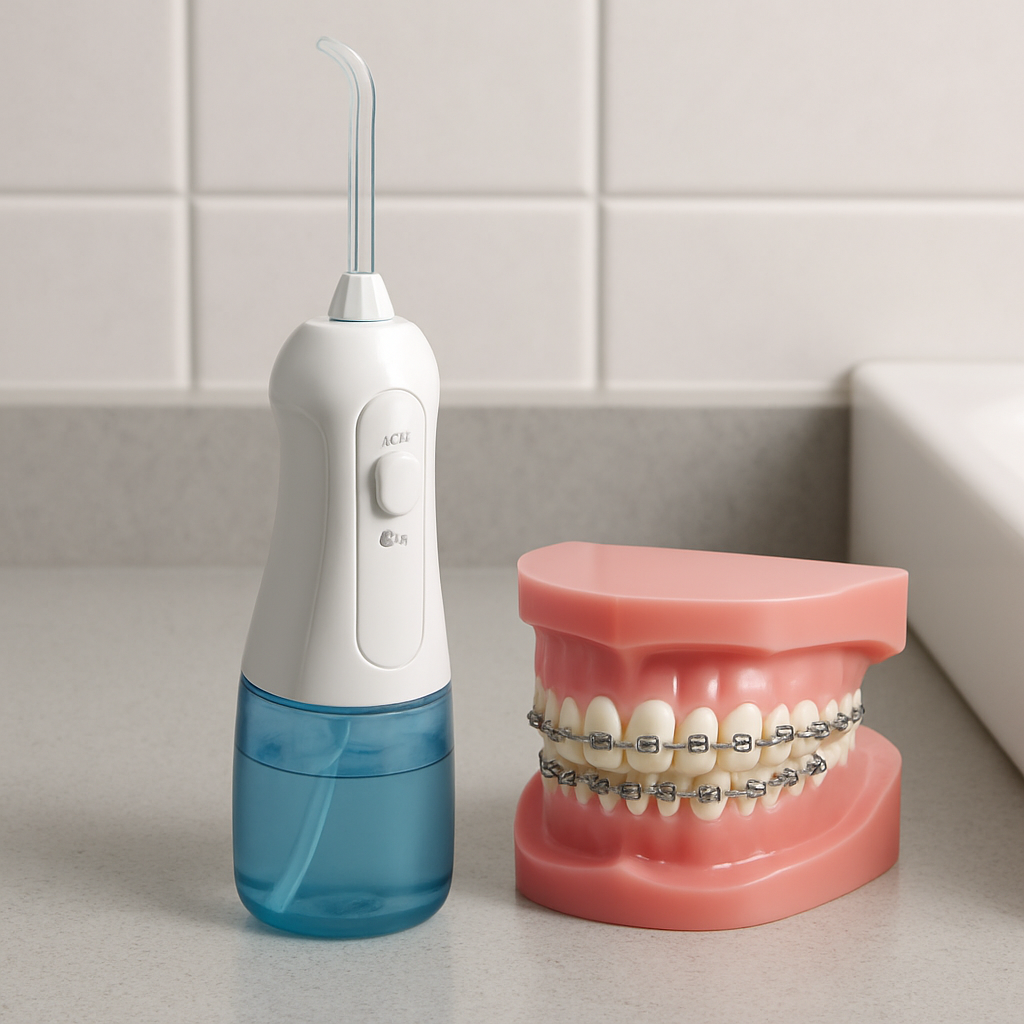
5. Best Budget Water Flosser with Multiple Pressure Settings
Waterpik Aquarius – Ten‑Level Flexibility
When you want a budget water flosser that actually lets you dial the pressure up or down, the Aquarius is hard to beat. It offers ten distinct settings, so you can start with a feather‑light stream for sensitive gums and crank it up when you need to blast away stubborn popcorn kernels.
What I love is the visual dial – you see exactly where you are on the scale, no guessing. The ten‑step range gives you enough granularity to find that "just right" spot without over‑doing it.
And because it plugs into the wall, you never have to worry about a dead battery cutting your routine short.
Waterpik Ion – Cord‑less, Ten‑Pressure Power
If you prefer a portable setup but still crave a full pressure spectrum, the Ion delivers the same ten‑step dial in a cordless package. A single charge lasts about a week of daily flossing, so you can stash it in a gym bag or travel case without hunting for an outlet.
The tip swaps are quick, and the soft‑pocket tip is a lifesaver for braces or delicate gum tissue. Even on the highest setting, the flow feels controlled rather than like a garden hose.
Philips Sonicare Power Flosser 3000 – Three‑Level Simplicity
Not every budget model needs ten levels to be effective. The Sonicare Power Flosser 3000 keeps it simple with low, medium, and high settings, which is perfect if you don’t want to fuss over a dial.
Its USB‑C charging means you can power it up with the same brick you use for your phone, and the detachable 8‑ounce reservoir is easy to fill on the go. The medium setting usually hits the sweet spot for most users, while the high setting tackles heavy meals.
Oral‑B OxyJet Mini – Five‑Step Precision
The OxyJet Mini squeezes five pressure levels into a tiny USB‑C‑powered unit. It’s ideal for small bathrooms or travel, and the pulse mode adds a rhythmic feel that can be gentler on tender gums.
Even though the reservoir is only 12 ounces, the five‑step range lets you start super soft and work up to a stronger blast, giving you control without a bulky tank.
How to Choose the Right Pressure Range
First, think about your gum health. If you bleed easily or have recent dental work, start at the lowest setting and stay there for a week. Notice how your gums feel, then inch up one notch if there’s no discomfort.
Second, consider your lifestyle. Plug‑in units like the Aquarius give you unlimited power at home, but if you travel often, a cordless model with a decent battery life – like the Ion – will save you from hunting for outlets.
Third, look at tip variety. Multiple pressure settings are only useful if the tip you’re using can handle the flow. Soft, silicone‑covered tips work best on low to mid settings, while harder plastic tips can tolerate the high‑pressure bursts.
Quick Tip: The One‑Minute Warm‑Up
Before you launch into a full‑mouth session, run the flosser on the lowest pressure for 30 seconds with lukewarm water. This warms the water, eases the gums into the routine, and gives you a feel for the pressure before you crank it up.
After you’ve gotten comfortable, aim for a 60‑second total run – 15 seconds per quadrant – using the timer built into most budget models. You’ll get thorough cleaning without over‑doing any one area.
Bottom Line
For a budget water flosser that doesn’t skimp on pressure control, look for ten‑step models like the Aquarius or Ion if you want full flexibility. If you prefer simplicity, the Sonicare Power Flosser 3000 or OxyJet Mini give you enough range to stay comfortable while still delivering a solid clean.
Start low, listen to your gums, and adjust as you go. Within a week you’ll notice less bleeding, fresher breath, and that satisfying “whoosh” feeling that tells you you actually reached those tricky spots.
6. Most Durable Budget Water Flosser
When you finally pick a budget water flosser, you want it to survive the daily hustle – the spills, the travel, the occasional tumble off the counter. Durability isn’t just a nice‑to‑have; it’s the reason you won’t end up buying a replacement after a month.
1. Waterpik Aquarius – Solid Plug‑In Build
The Aquarius feels like it’s built for a kitchen marathon. Its base is a heavy‑duty ABS plastic that stays put even when you accidentally nudge it. The 22‑ounce reservoir has a reinforced lip, so you won’t crack it if you over‑fill by a splash.
What really sold me is the three‑year warranty – a clear sign the company expects the unit to last. The tip connectors are metal‑clad, which means they won’t wear out after a dozen swaps. If you’ve ever struggled with a flimsy tip that loosens, you’ll appreciate this sturdier design.
2. Waterpik Ion – Cord‑less Toughness
If you need a portable option that can take a gym bag or a backpack, the Ion’s battery compartment is sealed with silicone gaskets. That seal keeps dust out and protects the lithium‑ion cell from moisture – a common failure point in cheaper models.
Its 26‑ounce tank is made from high‑density polymer, resisting dents and cracks. The unit also comes with a reinforced charging dock that prevents the base from wobbling when you set it down. The tip set includes a metal‑reinforced orthodontic tip that holds up even with daily use.
3. Philips Sonicare Power Flosser 3000 – Compact but Resilient
The Sonicare’s handheld body is molded from impact‑resistant polymer, so a slip on the bathroom floor isn’t a death sentence. The detachable 8‑ounce reservoir snaps into place with a click‑lock, keeping it from popping loose during travel.
Battery life is another durability factor: a full charge lasts about 10 days of twice‑daily flossing, meaning you won’t be hunting for a charger every few weeks. The included tip is a silicone‑coated brush that resists tearing, and the unit’s IPX4 water‑resistance rating protects the electronics from splashes.
4. Oral‑B OxyJet Mini – Little Unit, Big Longevity
Don’t let the mini size fool you – the OxyJet’s housing is a rugged polycarbonate shell that can survive the occasional drop from a bathroom shelf. Its USB‑C charging port is reinforced with a metal sleeve, preventing the common wear‑and‑tear seen on cheap chargers.
The 12‑ounce tank uses a reinforced silicone liner, so you won’t hear that annoying “pop” when you overfill. The single‑use snap‑on tip is cheap to replace, but the device’s internal pump is rated for 20,000 cycles, a figure that translates to years of consistent use.
So, how do you decide which durable champion fits your life? Think about where you’ll use it most. If you’re a home‑bound floss‑fan who values a long warranty, the Aquarius is a safe bet. Need something that can survive a gym bag and still look good after a few drops? The Ion’s sealed battery and tough tank are hard to beat.
And for those who travel light, the Sonicare Power Flosser 3000’s impact‑proof body and long‑lasting battery make it a road‑ready companion. Finally, if countertop space is at a premium, the OxyJet Mini packs durability into a coffee‑mug‑sized silhouette.
Quick durability checklist before you click “add to cart”:
- Warranty length – three years or more signals confidence.
- Material of tank and base – ABS or high‑density polymer reduces cracks.
- Tip attachment – metal‑clad or reinforced silicone lasts longer.
- Battery & charging – sealed compartments and reinforced ports prevent early failure.
- Water‑resistance rating – IPX4 or higher protects internal electronics.
Give one of these sturdy budget water flossers a try, and you’ll likely go months – maybe years – without a replacement. Your gums get the care they deserve, and your wallet stays happy.
Conclusion
We've walked through the best budget water flossers, from the sturdy Aquarius to the pocket‑size OxyJet, and you now have a clear picture of which model fits your routine.
Remember, durability, pressure flexibility, and tip variety are the three pillars that keep a cheap flosser from becoming a regretful purchase.
So, if you value a long warranty and a hefty tank, the Aquarius is your safe bet. Need cordless freedom for the gym bag? The Ion’s sealed battery and rugged tank have you covered. And for travelers who crave a coffee‑mug‑sized hero, the OxyJet Mini proves size isn’t the same as weakness.
Here’s a quick recap you can stick on your bathroom mirror:
- Warranty ≥ 3 years signals confidence.
- ABS or high‑density polymer tanks resist cracks.
- Metal‑clad or reinforced silicone tips outlast cheap plastics.
- IPX4‑plus water‑resistance protects the pump.
- Choose the pressure range that matches your gum sensitivity.
Now that you’ve got the checklist, pick one, fill the reservoir with lukewarm water, and give your gums the gentle, consistent care they’ve been missing.
Ready to stop the morning floss fight and let water do the work? Click “add to cart” and enjoy a healthier smile without draining your wallet today.
FAQ
What is a budget water flosser and how does it differ from a premium model?
A budget water flosser is a low‑cost device that still gives you the core benefits of water‑based flossing – a pulsating water stream, interchangeable tips, and adjustable pressure. It usually plugs into the wall, has a plastic reservoir, and offers fewer bells‑and‑whistles than a premium model. You won’t get high‑end Bluetooth apps or ultra‑quiet pumps, but the cleaning performance is comparable for everyday use.
Can a budget water flosser effectively clean around braces?
Yes – a budget water flosser can be a game‑changer if you wear braces. The key is a soft‑pocket or orthodontic tip that slides between brackets without snapping. Models like the Waterpik Aquarius or Ion include these tips even in their budget lines. Use the lowest pressure setting at first, aim the stream at a 45‑degree angle to the wire, and you’ll dislodge food particles that traditional floss can’t reach.
How many pressure settings do I need for sensitive gums?
If your gums bleed easily, start with the lowest pressure – usually 1 or 2 on a ten‑step dial. Most people find a comfortable sweet spot between 3 and 5, which is strong enough to clear plaque but gentle enough not to irritate. You can test it by running the stream along the gum line for 10 seconds; if you feel a mild tingle without bleeding, you’ve hit the right level.
Is a cordless battery‑powered flosser worth buying on a tight budget?
Battery‑powered units are tempting because you can stash them in a gym bag or use them in the shower, but they do add a small price premium. On a strict budget, look for models that charge via USB‑C and promise at least a week of use per charge – the Waterpik Ion and the Oral‑B OxyJet Mini fit that bill. The convenience usually outweighs the few extra dollars, especially if you travel often.
What maintenance routine will keep my budget water flosser working for years?
To keep a budget water flosser humming for years, rinse the reservoir after every session and wipe the tip dry. Once a week, fill the tank with a mixture of half water, half white vinegar, run it for 30 seconds, then rinse thoroughly – this prevents mineral buildup. Store the unit upright so the water drains away from the pump, and check the battery contacts (if cordless) for any corrosion before each charge.
Do I really need to replace the tips, and how often?
Tips are the consumable part of any water flosser, and they do wear out over time. For most silicone‑coated tips, replace them every three to six months, or sooner if you notice cracks or reduced water flow. Metal‑clad orthodontic tips last longer, but swapping them out when they become loose keeps the pressure consistent. Keep a spare set on hand so you never have to pause your routine.
Will using a budget water flosser reduce gum bleeding compared to string floss?
Studies show that regular water flossing can cut plaque by up to 30 % and reduce gum bleeding more effectively than string floss alone. Even a budget model with ten pressure levels delivers enough force to dislodge food particles and gently massage the gums, which promotes healthier tissue. If you use it twice daily for a minute per quadrant, most users report noticeably less bleeding after a week or two.
