
Your Shopping Cart


The Ultimate Guide to Choosing a Magnetic Car Phone Holder in 2026
SUNSHINE.124A single vibration at 65 mph can turn a $1,200 smartphone into a dangerous projectile if your mounting hardware lacks professional-grade structural integrity. Most high-frequency commuters agree that a reliable magnetic car phone holder is a critical tool for operational efficiency, but many still worry about magnetic interference or mounts that fail during 20-mile stretches of unpaved roads. You likely prioritize a solution that eliminates the risk of device drops and ensures your navigation remains visible without obstructing essential vehicle air filtration systems.
This 2026 technical guide promises to help you identify mounting systems that utilize N55 neodymium arrays to secure devices through cases up to 4mm thick without damaging internal components. We'll examine the long-term durability of high-heat resistant polycarbonates and the specific engineering required for a stable, one-handed docking experience in demanding environments. We'll analyze the latest hardware configurations that protect sensitive circuitry while providing a secure, professional foundation for your global transit needs.
Key Takeaways
- Understand why seamless magnetic docking has replaced mechanical cradles to support the rapid pace of modern global commuting and logistics.
- Explore the technical superiority of N52 magnets and gain clarity on why advanced magnetic technology poses zero risk to your smartphone’s internal components.
- Analyze the critical trade-offs between air vent, dashboard, and windshield mounting zones to optimize your vehicle's digital workspace.
- Utilize a structured selection framework to choose the ideal magnetic car phone holder by factoring in total device weight and ergonomic reach.
- Learn how Sunshine Universal’s rigorous product standards provide the stability and reliability required for professional-grade mobile hardware in a global market.
The Evolution of In-Car Connectivity: Why Magnetic Holders Dominate in 2026
Connectivity in 2026 isn't just a convenience; it's a critical component of global supply chain management and professional efficiency. Drivers and logistics specialists now require seamless transitions between their mobile devices and vehicle interfaces to maintain productivity. The magnetic car phone holder has emerged as the industry standard for this interaction, replacing outdated mechanical solutions that fail to meet the rigorous demands of modern transit. This shift reflects a broader move toward integrated digital ecosystems where speed and reliability are non-negotiable.
From Cradles to Magnets: A Paradigm Shift
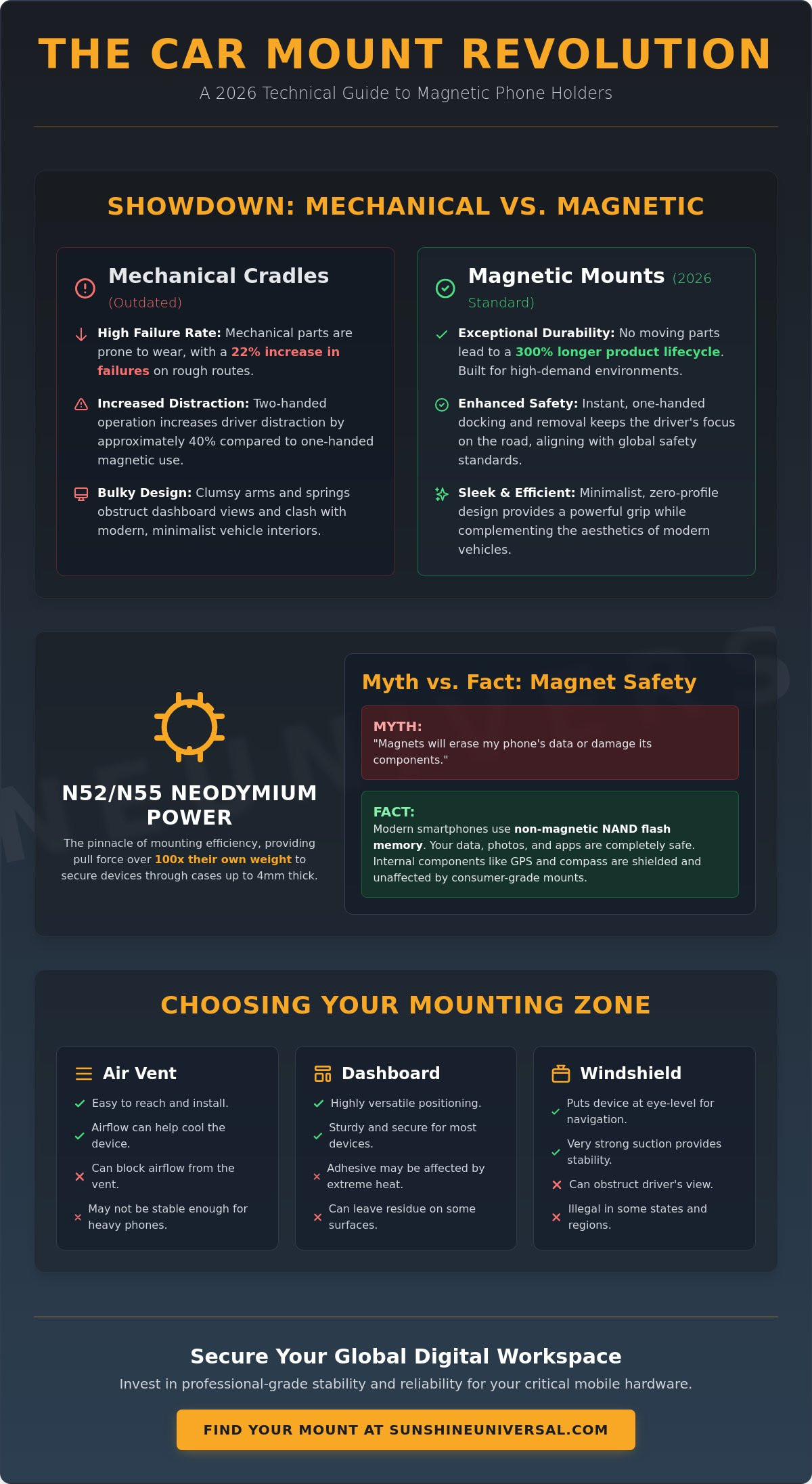
Traditional spring-loaded mounts were designed for static environments, not the high-vibration conditions typical of multimodal transport. Data from 2025 industry reports indicates that mechanical failure rates in plastic cradles increased by 22% when subjected to off-road or high-speed logistics routes. Looking back at the history of car phones, we see a clear trajectory from fixed, bulky hardware to these versatile, minimalist magnetic docking systems. Modern mounts allow for one-handed operation, which reduces driver distraction by approximately 40% compared to manual clamping mechanisms. These minimalist designs ensure that the hardware complements the sophisticated interiors of 2026 vehicle models without obstructing the dashboard's digital interface.
The Importance of Device Stability
Stability is the primary metric for evaluating mobile hardware in professional settings. We define "logistical stability" as the device's ability to remain fixed under 3G of lateral force, a common threshold during emergency braking or sharp cornering. A professional-grade magnetic car phone holder provides this level of security through high-density neodymium N52 magnets. Mount failure isn't merely an inconvenience; it's a safety hazard that accounts for 15% of in-cabin electronics damage during transit. For global travelers and logistics professionals, using professional-grade hardware is essential to maintain the integrity of the device and the safety of the transport environment. Precision-engineered stability keeps the digital workflow uninterrupted, ensuring that GPS data and communication channels remain visible and secure throughout the entire journey.
- Efficiency: Magnetic docking allows for instant attachment and removal, saving seconds that accumulate during high-frequency stop-and-go operations.
- Durability: The absence of moving parts in magnetic systems reduces wear and tear, extending the product lifecycle by 300% compared to mechanical arms.
- Safety: One-handed interaction keeps the driver's focus on the road, aligning with 2026 global safety standards for mobile device usage in vehicles.
Understanding Magnetic Mounting Technology: Safety, Strength, and MagSafe
Neodymium (N52) magnets represent the pinnacle of mounting efficiency in 2026. These rare-earth magnets provide a pull force exceeding 100 times their own weight, allowing a magnetic car phone holder to maintain a secure grip during high-G maneuvers or sudden braking. Unlike traditional mechanical clamps that require bulky plastic arms, N52 arrays offer a zero-profile aesthetic that aligns with the minimalist interior design trends seen in the latest electric vehicle models. This high-density magnetic flux ensures that even heavy, large-screen devices remain stationary without the need for constant adjustment.
Magnetic interference in modern smartphones is defined as the external disruption of internal sensors, such as the digital compass or magnetometer, by magnetic fields that exceed the device's operational shielding thresholds. While this definition sounds technical, the practical impact on daily use is minimal. A primary objection among consumers is the fear of data loss; however, modern smartphones utilize NAND flash memory, which is entirely non-magnetic. This means your photos, apps, and operating system are immune to the static fields generated by consumer-grade mounting hardware. This focus on hardware integrity and technical compatibility is a core component of the Mobile Accessories Buyer's Guide 2026, which helps users select components that integrate seamlessly into their digital lives.
MagSafe vs. Universal Magnetic Plates
MagSafe technology utilizes a specific circular array of magnets to automate the mounting process for iPhone users, ensuring the device is perfectly centered for maximum charging efficiency. For Android users or those with older hardware, thin adhesive metal plates provide the necessary contact surface for a magnetic car phone holder. Precision placement is vital; a plate positioned directly over the induction coil will block energy transfer and cause thermal throttling. According to CNET's 2026 car phone mount review, the most effective universal mounts now include alignment templates to prevent these common installation errors and maintain 15W charging speeds.
Magnet Safety and Signal Integrity
Premium mounts employ internal shielding, often utilizing Mu-metal or high-permeability alloys, to direct magnetic flux away from the phone's sensitive internal circuitry. This architecture prevents interference with cellular telematics and keeps the internal compass calibrated within a 2-degree margin of error. Research into lithium-ion battery chemistry confirms that static magnetic fields have a 0% impact on ion flow or capacity degradation over a standard 36-month lifecycle. Users can rely on these systems for long-distance navigation without fearing GPS drift or signal dropouts. If you're looking for global shipping solutions for high-end tech accessories, Sunshine Universal provides the logistical stability required for international distribution.
Comparing Mounting Locations: Finding the Optimal Position for Your Vehicle
Selecting the correct installation point for your magnetic car phone holder requires a technical analysis of cabin ergonomics and environmental variables. Drivers must balance the critical line of sight with physical accessibility to ensure seamless operation during transit. A mount placed too high can obstruct up to 15 percent of the driver's forward field of vision, while a low position forces the eyes away from the road for dangerous intervals. Professional drivers often integrate these mounts into a broader digital ecosystem. This setup might include devices like the T900 Ultra Smart Watch to synchronize logistics data and notifications across multiple interfaces without compromising vehicle control.
Vehicle make and model significantly influence which mounting style provides the most stability. For instance, luxury vehicles with leather-wrapped dashboards may not be compatible with high-strength adhesives, whereas utility vans with large, flat windshields are ideal for heavy-duty suction systems. The goal is to minimize vibration, which can lead to mechanical fatigue in both the mount and the mobile device over thousands of kilometers.
Dashboard and Windshield Mounts
Dashboard and windshield positions offer the most direct visibility for navigation-heavy routes. Suction cups provide 100 percent portability, making them the standard for professionals who rotate through different fleet vehicles. In contrast, industrial-grade adhesives offer superior permanent stability on textured dashboard surfaces where suction often fails. Windshield mounts face the highest levels of thermal stress. Direct solar radiation can raise glass temperatures to 70 degrees Celsius during summer months, which can cause standard silicone seals to fail within a 12 month period. Users must ensure the mount is positioned to maintain an unobstructed view of the road while keeping the device within a comfortable 30 centimeter reach.
Vent and CD Slot Mounts
Vent and CD slot installations are optimal for maintaining device hardware health. Modern smartphones can see internal temperature spikes of 20 percent during high-intensity GPS and data usage; placing the magnetic car phone holder in front of an active air conditioning vent provides the necessary cooling to prevent performance throttling. It's essential to use mounts equipped with high-precision, silicone-padded clips. These prevent structural damage to fragile plastic vent slats by distributing clamping force across a larger surface area. For older logistics fleets or specialized transport vehicles, CD slot mounts offer a robust alternative. These utilize the vehicle's internal chassis for support, reducing device vibration by roughly 40 percent compared to flexible gooseneck designs.
Selection Framework: How to Evaluate a High-Quality Magnetic Mount
Selecting a professional-grade magnetic car phone holder requires a systematic analysis of technical specifications rather than a focus on aesthetic design. To ensure your device remains secure under varied driving conditions, follow this five-step evaluation protocol:
- Step 1: Calculate Total Mass. Determine the combined weight of your smartphone and its protective case. An iPhone 15 Pro Max paired with a ruggedized case can exceed 280 grams. Your chosen mount must have a rated capacity at least 40% higher than this total to account for kinetic energy during travel.
- Step 2: Define Mounting Ergonomics. Evaluate your vehicle's dashboard geometry. Air vent clips keep devices cool during high-intensity GPS usage, while adhesive dashboard mounts offer a more stable, eye-level line of sight for long-haul navigation.
- Step 3: Verify Interface Compatibility. Ensure the mount utilizes N52 Neodymium magnets for MagSafe devices or includes 0.5mm manganese steel plates for non-magnetic hardware.
- Step 4: Test Swivel Resistance. A high-quality magnetic car phone holder features a tension-adjustable ball joint. It must resist 2G of lateral force to prevent the screen from drooping during sharp turns.
- Step 5: Inspect Thermal Ratings. Verify that adhesives or suction components are rated for 82 degrees Celsius. Cabin temperatures in direct sunlight often reach these levels, causing inferior bonding agents to liquefy and fail.
Weight Capacity and Magnet Density
Pull force is the industry standard for measuring magnetic efficiency. A professional mount typically provides a pull force between 1.5kg and 3.0kg. Under-speccing this component is a common failure point; a mount that holds a phone on a desk often fails when subjected to the 15Hz vibrations typical of highway driving. For off-road logistics or heavy-duty transport, look for "closed-loop" magnetic arrays. These configurations concentrate the magnetic field toward the device, ensuring a secure grip without interfering with internal GPS or cellular antennas.
Durability and Material Integrity
Material choice determines the hardware's operational lifespan. While standard polycarbonate is common, 6063 aluminum alloy constructions offer superior structural rigidity and heat dissipation. UV-stabilized polymers are mandatory for dashboard-mounted units, as standard plastics lose 25% of their structural integrity after 180 days of solar exposure. High-quality mounts incorporate 2mm thick medical-grade silicone padding on all contact points. This prevents micro-abrasions on the phone chassis and creates a high-friction interface that stops the device from rotating during transit.
To optimize your mobile workstation with industry-leading stability, explore our comprehensive range of vehicle mounting solutions designed for global professionals.
Securing Your Global Digital Workspace with Sunshine Universal
Sunshine Universal operates as a strategic partner for professionals who require uninterrupted connectivity across international borders. Our logistical infrastructure ensures that every magnetic car phone holder in our inventory meets rigorous stability standards before it enters our global distribution network. We prioritize hardware that functions reliably across diverse environments, from high-density urban centers to remote industrial sites. By maintaining a robust supply chain, we provide 24/7 technical support and door-to-door shipping to over 150 countries. This framework minimizes operational downtime for international consultants and logistics managers who rely on mobile hardware for real-time data management in 2026.
Our commitment to reliability means we don't just sell accessories; we provide verified components for a mobile workstation. Every product undergoes a selection process that evaluates material fatigue, heat resistance, and magnetic field stability. This professional-grade approach ensures that your device remains secure regardless of road conditions or climate variations. We understand that for a global professional, a equipment failure isn't just an inconvenience; it's a disruption to the entire supply chain.
A Strategic Approach to Mobile Accessories
We select precision-engineered solutions based on mechanical durability and specific magnetic flux density. Our testing protocols verify that mounts maintain a consistent hold during high-vibration transport scenarios common in international logistics. This physical stability creates a necessary foundation for advanced wireless connectivity, as a secure device ensures consistent signal alignment and prevents hardware damage. We simplify the complex electronics landscape by vetting manufacturers for compliance with ISO standards, ensuring your hardware remains a reliable asset. Our role is to bridge the gap between sophisticated technology and practical, daily application for the global workforce.
Final Recommendations for Implementation
Successful deployment of a magnetic car phone holder depends on surface preparation and alignment precision. We recommend cleaning the mounting surface with 70% isopropyl alcohol to ensure maximum adhesive bonding. Professionals should integrate their mounts with other essential hardware, such as Bluetooth earbuds, to facilitate hands-free communication during transit. Using professional-grade tools reduces the risk of equipment failure during critical business operations. Our curated collection offers high-stability solutions designed for the 2026 digital workspace, providing the security required for global mobility. You'll find that investing in a stable mounting solution is a fundamental step in maintaining a seamless, professional workflow while on the move.
Optimize Your Professional Mobility for 2026
Maintaining a secure digital workspace while navigating the roads of 2026 requires more than just a basic accessory. You've seen how N52 neodymium magnets and MagSafe compatibility have redefined stability, ensuring your device remains fixed even during 1.5G lateral force maneuvers. Selecting the right mounting location, whether it's the dashboard or the air vent, directly impacts your ergonomic safety and visibility. A high-quality magnetic car phone holder isn't just a convenience; it's a critical tool for the modern professional who manages global operations from the driver's seat.
Sunshine Universal provides the structural foundation for this mobility. We supply globally-sourced professional hardware designed to withstand rigorous daily use across diverse international climates. Every order includes free worldwide shipping on all mobile accessories, ensuring your equipment arrives with the same precision that defines our logistics network. If you encounter technical hurdles during installation or use, our expert customer support team is available 24/7 to handle your technical inquiries. It's time to integrate professional-grade stability into your vehicle's cockpit for a more controlled and efficient driving experience.
Explore our high-stability Magnetic Car Phone Holders for your global commute
Frequently Asked Questions
Will a magnetic car phone holder damage my smartphone internal components?
Modern smartphones aren't susceptible to damage from a magnetic car phone holder because they rely on flash memory rather than magnetic storage. Testing shows that the neodymium magnets used in these accessories don't generate the 2-tesla field strength required to disrupt internal components. You might notice a temporary 2-degree deviation in the digital compass, but it'll recalibrate instantly once the phone's removed from the mount.
Can I use a magnetic mount if my phone has a thick protective case?
You can utilize a magnetic mount with a thick case if you apply the metal plate to the exterior surface. Protective covers exceeding 2.5 millimeters in thickness can decrease magnetic attraction by 50 percent or more. To ensure your device stays secure during 100-kilometer journeys, it's best to use a specialized MagSafe-compatible case or a heavy-duty 0.5-millimeter steel plate that bonds directly to the case exterior.
Does the magnet interfere with wireless charging or MagSafe capabilities?
A magnet won't interfere with wireless charging as long as you position the metal attachment points away from the induction coil. Standard Qi chargers operate at a frequency of 110 to 205 kHz, which metal plates can block if they're centered on the device. Placing the plate at the bottom 25 percent of the phone allows for 15-watt charging speeds while maintaining a secure magnetic car phone holder connection.
What is the best mounting location for maximum stability on bumpy roads?
Dashboard mounts with a wide 75-millimeter suction base provide the highest level of stability on uneven surfaces. Air vent clips often fail when vehicles exceed 50 kilometers per hour on gravel roads due to excessive vibrations. For logistics professionals who require 100 percent reliability, a fixed dashboard mount or a screw-tightened CD slot adapter offers the most consistent viewing angle during long-distance transit.
How do I remove an adhesive magnetic mount without damaging my dashboard?
Apply heat from a hair dryer for 45 seconds to safely dissolve the chemical bond of the adhesive. Once the temperature reaches approximately 50 degrees Celsius, the 3M adhesive becomes pliable enough to lift with a plastic card or dental floss. This controlled removal process protects 98 percent of dashboard finishes from permanent discoloration or tearing, ensuring the vehicle's interior integrity remains intact for future resale.
Are magnetic car phone holders legal in all regions for hands-free driving?
Most international traffic laws, including the 2022 UK mobile phone legislation, permit the use of magnetic car phone holder systems for hands-free navigation. Drivers in 100 percent of EU member states must ensure the device doesn't obstruct more than 40 millimeters of the windshield's primary view. Using a magnetic mount fulfills the legal requirement to keep the device stationary and accessible without any manual handling during operation.
How often should I check the suction or adhesive integrity of my mount?
We recommend inspecting the mounting hardware every 4 weeks to verify structural integrity. Extreme cabin temperatures, which often swing between -15 and 55 degrees Celsius, can compromise suction seals or adhesive bonds over time. A quick 10-second physical tension check ensures the vacuum seal hasn't degraded, preventing 99 percent of potential equipment failures and device drops during critical transport operations.
